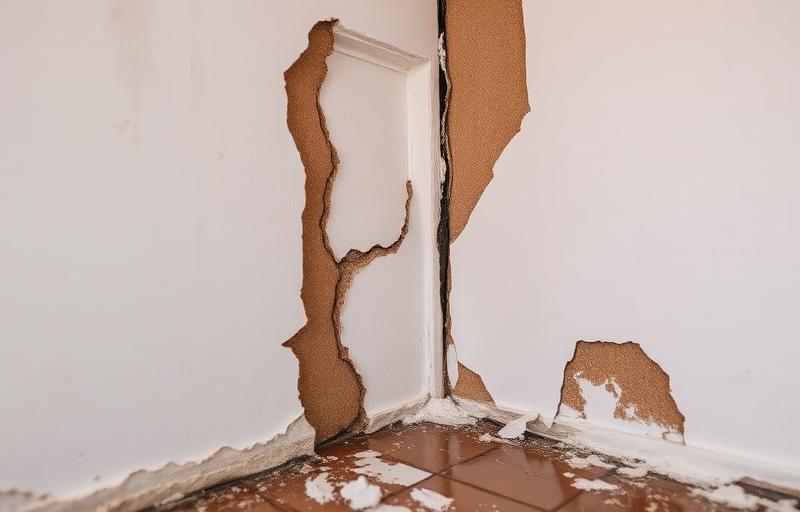



When your Mesa home suffers damage from fire, water, storms, or other covered events, dealing with insurance can feel as stressful as the damage itself. Understanding the process helps you get fair compensation and faster restoration.
ProWorx Restoration provides insurance restoration services and works directly with insurance companies throughout the claims process.
Step 1: Document Everything Immediately
Before cleaning up or making repairs, document the damage thoroughly:
- Take photos and videos of every damaged area from multiple angles
- Document serial numbers of damaged appliances and electronics
- Create a written inventory of damaged personal property
- Save any receipts for emergency expenses (hotel, food, temporary repairs)
- Keep damaged items — don't throw anything away until your adjuster approves
Step 2: Contact Your Insurance Company
Report the claim as soon as possible. Most policies require "prompt notice" of damage. When you call:
- Get your claim number and adjuster contact information
- Ask about your policy's coverage limits and deductible
- Request a copy of your full policy if you don't have one
- Ask about Additional Living Expenses (ALE) coverage if your home is uninhabitable
Step 3: Prevent Further Damage
Your policy requires you to take reasonable steps to prevent additional damage. This includes:
- Tarping damaged roofs
- Board-up of broken windows and doors
- Water extraction for active flooding
- Turning off utilities if necessary
Keep receipts for all emergency repairs — they're typically covered by your policy. For fire and water damage emergencies, acting quickly prevents exponentially worse damage.
Step 4: Get a Professional Damage Assessment
Don't rely solely on your insurance adjuster's assessment. Get an independent evaluation from a licensed restoration contractor. At ProWorx Restoration, our assessments include:
- Detailed scope of damage documentation
- Moisture mapping for water damage
- Structural integrity evaluation
- Line-item repair estimates using industry-standard pricing
Step 5: Meet with Your Insurance Adjuster
When your adjuster visits:
- Be present for the inspection
- Share your documentation and photos
- Point out all damage — adjusters can miss hidden issues
- Have your contractor's estimate available for comparison
- Don't sign anything you don't fully understand
Common Insurance Claim Mistakes
- Waiting too long to file: Delays can result in claim denial
- Incomplete documentation: Missing photos or inventory leads to lower settlements
- Accepting the first offer: Initial estimates are often lower than actual repair costs
- Making permanent repairs before approval: Only do emergency mitigation until your claim is approved
- Not understanding your policy: Know the difference between Actual Cash Value (ACV) and Replacement Cost Value (RCV)
Types of Damage Covered by Standard Homeowner's Insurance
- Typically covered: Fire, smoke, wind, hail, lightning, burst pipes, vandalism
- Usually NOT covered: Flood (requires separate policy), earthquake, gradual wear, mold from neglect
- Varies by policy: Sewer backup, foundation damage, pool damage
For monsoon-related damage specifically, check our monsoon damage prevention guide.
How ProWorx Restoration Helps with Insurance Claims
We simplify the process by:
- Providing detailed documentation that supports your claim
- Communicating directly with your insurance adjuster
- Using Xactimate — the same estimating software your insurance company uses
- Handling supplemental claims when hidden damage is discovered
- Managing the entire restoration from cleanup to reconstruction
Contact us immediately after damage occurs — early involvement leads to smoother claims and faster restoration.